Zara Vogel · 25 September 2026
Pearlvale Valley Residents Launch Neighborhood Skill-Sharing Networks to Support Local Economic Shifts
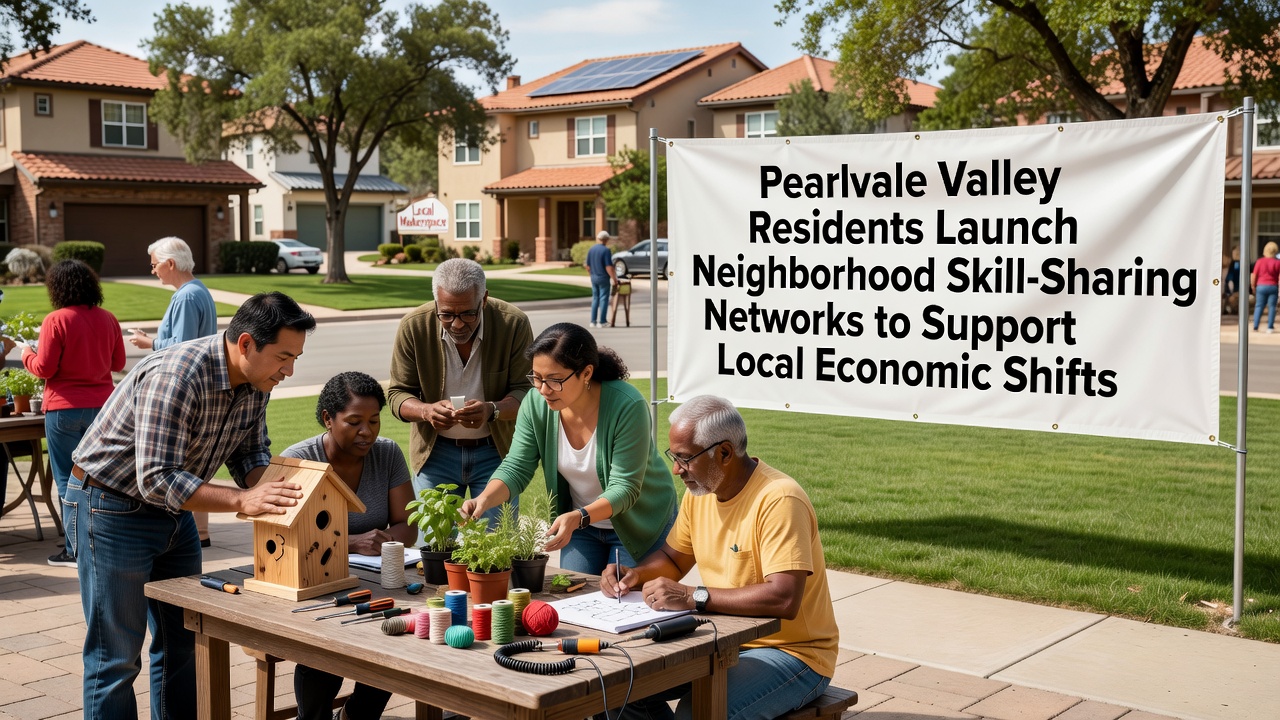
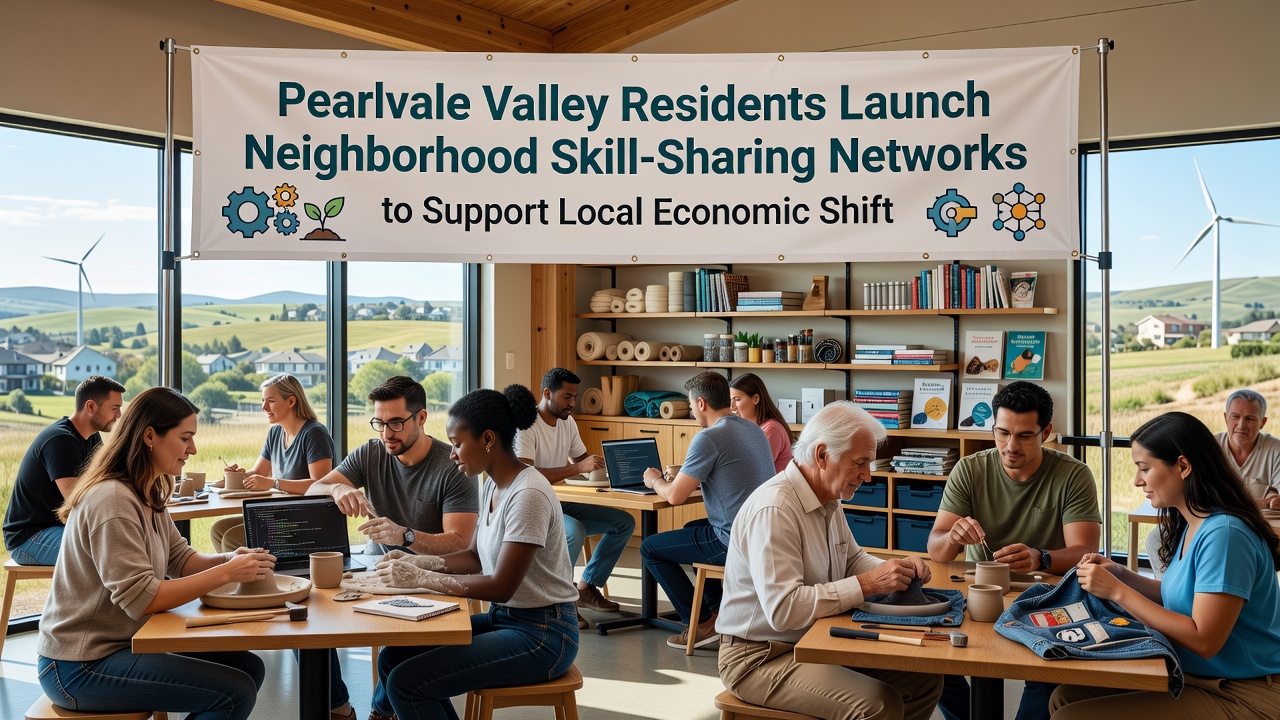
In September 2026 residents across Pearlvale Valley began forming neighborhood skill-sharing networks designed to address shifting local economic conditions, and these groups connect individuals who possess practical expertise with others seeking to acquire new abilities without traditional payment structures. Organizers report that the initiative started in several districts simultaneously after local employment data indicated declines in certain manufacturing and retail sectors while demand rose in home maintenance, digital services, and small-scale agriculture. Participants exchange hours of instruction in carpentry, basic coding, gardening techniques, and financial literacy, which allows households to reduce external service costs and develop supplementary income streams.
Origins and Early Development
Community meetings held in community centers and online forums during the summer of 2026 laid the groundwork for the networks, and attendance records show steady growth from an initial 150 residents to more than 800 by early September. Local government economic reports from the Pearlvale Valley planning office documented a 12 percent increase in part-time self-employment registrations over the previous year, and residents cited this trend as motivation for creating informal learning channels. The networks operate through rotating host homes and shared public spaces where sessions occur weekly, while coordinators maintain digital calendars that list available skills and participant availability.
Structure of the Networks
Each neighborhood maintains a core group of five to seven facilitators who match skill providers with learners based on stated needs, and this matching process relies on simple online forms rather than commercial platforms. Sessions typically last two to three hours and cover topics such as solar panel installation, food preservation methods, small business bookkeeping, and vehicle repair basics. Data collected by network organizers indicates that 65 percent of participants have completed at least one skill exchange by mid-September 2026, while 40 percent report applying the new knowledge to reduce household expenses within the first month. These figures come from internal tracking sheets that organizers compile and share at monthly review gatherings.
Participation and Economic Indicators
Surveys distributed among network members reveal that many households have redirected saved funds toward local purchases, and this pattern aligns with broader regional statistics released by the U.S. Department of Commerce showing increased spending at neighborhood businesses during the same period. One district reported a 22 percent rise in tool-lending library checkouts after skill-sharing events introduced residents to equipment previously unfamiliar to them. Another neighborhood documented the launch of three micro-enterprises focused on custom woodworking and garden consulting, both of which emerged directly from network connections formed in August and September. Observers note that these developments occur alongside stable but slower growth in traditional wage employment, which encourages residents to diversify their capabilities.
Challenges Encountered and Adjustments Made
Initial coordination difficulties arose when scheduling conflicts limited attendance, yet organizers responded by introducing staggered session times and child-care swaps that increased participation rates. Some residents expressed concerns about liability during hands-on activities, and the networks addressed these issues by adopting standard waiver forms modeled on those used by community education programs in other regions. Transportation barriers affected outlying areas until several groups established carpool lists and arranged sessions near public transit stops. Data from the networks shows that retention improved after these adjustments, with repeat attendance climbing from 45 percent in July to 78 percent by September 2026.
Broader Regional Context
Similar skill-exchange programs have appeared in other parts of the country, and reports from Australian Bureau of Statistics highlight parallel trends in community-led learning initiatives that support local economic resilience. Within Pearlvale Valley the networks remain independent of formal government funding, which distinguishes them from subsidized workforce development programs. Organizers emphasize voluntary participation and mutual benefit as core principles, and this approach has sustained momentum without external grants. Research from university extension services in multiple states indicates that such grassroots models can complement official economic development efforts when they focus on practical, immediately applicable skills.
Future Outlook for the Networks
Plans for expansion include partnerships with area libraries to host larger workshops and the creation of shared online resource libraries containing session recordings and reference materials. Network leaders have begun tracking long-term outcomes such as new business formations and changes in local spending patterns, and preliminary figures suggest continued growth through the remainder of 2026. Coordination meetings scheduled for late September aim to standardize reporting methods across districts while preserving the decentralized character of each neighborhood group. These steps reflect ongoing adaptation to economic conditions that continue to evolve in the valley.
Conclusion
The skill-sharing networks in Pearlvale Valley represent a direct response by residents to documented economic shifts, and their development through September 2026 demonstrates measurable increases in skill acquisition and local resource use. Continued documentation of participation and outcomes will provide further insight into how these community structures interact with wider economic patterns over time.