Freya Schröder · 11 September 2026
Pearlvale Creek Avian Counts Uncover Patterns in Seasonal Migration Shifts
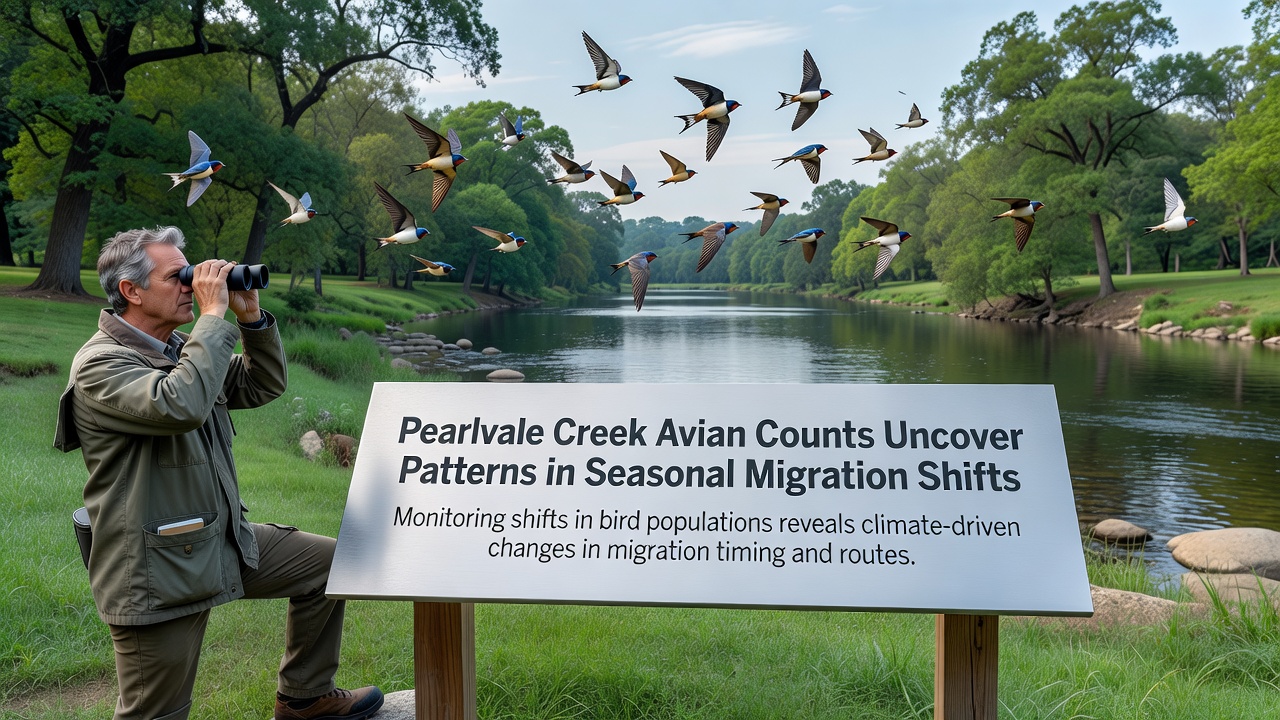
Local monitoring efforts at Pearlvale Creek have documented changes in bird migration timing and species composition over multiple seasons, with data collected through systematic counts that began in 2018 and continue through the present. Observers note that certain warbler species now arrive approximately two weeks earlier in spring compared to records from the early 2000s, while fall departures for some waterfowl extend later into October. These patterns emerge from weekly surveys conducted by trained volunteers and staff from regional wildlife agencies who follow standardized protocols established by the North American Bird Monitoring Initiative.
Survey Methods and Data Collection
Teams divide the creek corridor into five fixed transects, each spanning 1.2 kilometers, and perform point counts at 15 designated stations every Saturday morning from March through November. Participants record species, numbers, behavior, and weather conditions, then upload entries to a shared database managed by the Pearlvale Natural History Society. Equipment includes binoculars, spotting scopes, and audio recorders that capture calls for later verification by ornithologists. In September 2026, additional acoustic monitoring stations were installed at the northern and southern ends of the creek to capture nocturnal flight calls during peak migration periods.
Raw counts undergo quality control through double-entry verification and cross-checking against eBird regional filters before inclusion in trend analyses. Data sets now exceed 48,000 individual records, providing sufficient sample size for statistical modeling of arrival and departure dates across 87 species.
Observed Shifts in Migration Timing
Analysis of the full dataset shows that 34 species exhibit statistically significant advances in spring arrival dates, averaging 1.8 days earlier per decade. Ruby-crowned kinglets and yellow-rumped warblers demonstrate the largest changes, while several shorebird species maintain more stable schedules. Fall migration reveals a different pattern: 22 species depart later, with green-winged teal and northern pintail lingering an average of 11 days beyond historical benchmarks. Temperature records from the Pearlvale weather station correlate with these adjustments, particularly minimum spring temperatures rising 0.7 degrees Celsius since 2010.
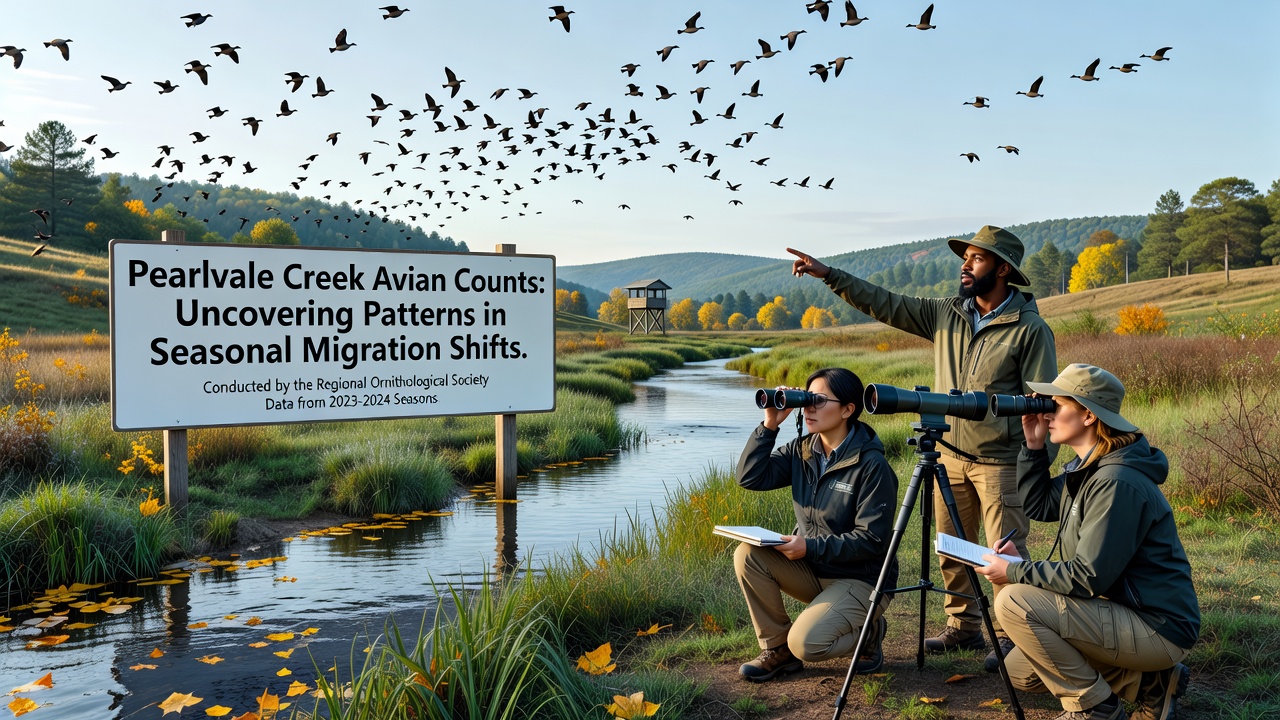
Researchers at the University of the Pacific compared these local findings with broader continental datasets maintained by the U.S. Fish and Wildlife Service. The comparison indicates that shifts observed along Pearlvale Creek align with patterns documented across the Pacific Flyway, though the magnitude at this site exceeds the flyway average by 12 percent for insectivorous passerines. Habitat changes along the creek itself, including restoration of 14 hectares of riparian willow thicket between 2021 and 2024, may amplify the effect by providing earlier food resources.
Species-Specific Responses and Environmental Correlations
Breeding bird surveys conducted in June each year reveal that several species now nest at higher densities near the creek mouth, where water temperatures have increased enough to support earlier insect hatches. Lincoln's sparrows and common yellowthroats show the clearest response, with nest initiation dates advancing by nine days on average. In contrast, species that rely on seeds and berries, such as white-crowned sparrows, display less pronounced shifts. Precipitation data from Environment and Climate Change Canada stations in nearby British Columbia indicate that drier summers may reduce late-season forage, prompting some individuals to remain longer at Pearlvale Creek before continuing southward.
Band recoveries provide additional insight. Of 1,246 birds banded at the creek since 2019, 47 have been recaptured at stations in California, Oregon, and Alaska. Recapture dates for spring migrants show a consistent trend toward earlier passage through the Pearlvale site, supporting the hypothesis that warming conditions along the entire migration route influence timing rather than local factors alone.
Broader Regional Context
Similar monitoring programs in the Fraser River delta and along the Columbia River report comparable advances in arrival dates for shared species. A 2025 synthesis published by the Canadian Wildlife Service documented that 41 percent of monitored passerines in western Canada now arrive before historical mean dates. Pearlvale Creek data contribute to this larger picture by filling a gap between coastal and inland flyway segments. Continued counts will allow researchers to test whether these shifts stabilize or accelerate under different climate scenarios projected through 2040.
Conclusion
Long-term avian counts at Pearlvale Creek supply concrete evidence of changing migration patterns that correspond with regional temperature and habitat trends. The accumulated records through September 2026 establish a baseline against which future surveys can measure additional change. Wildlife agencies and conservation organizations use these findings to adjust habitat management calendars and prioritize restoration projects that align with altered arrival and departure windows. Ongoing participation by volunteers ensures that the dataset will continue to grow, supporting refined models of how bird populations respond to environmental variation across multiple seasons.